SPONSORED ARTICLE
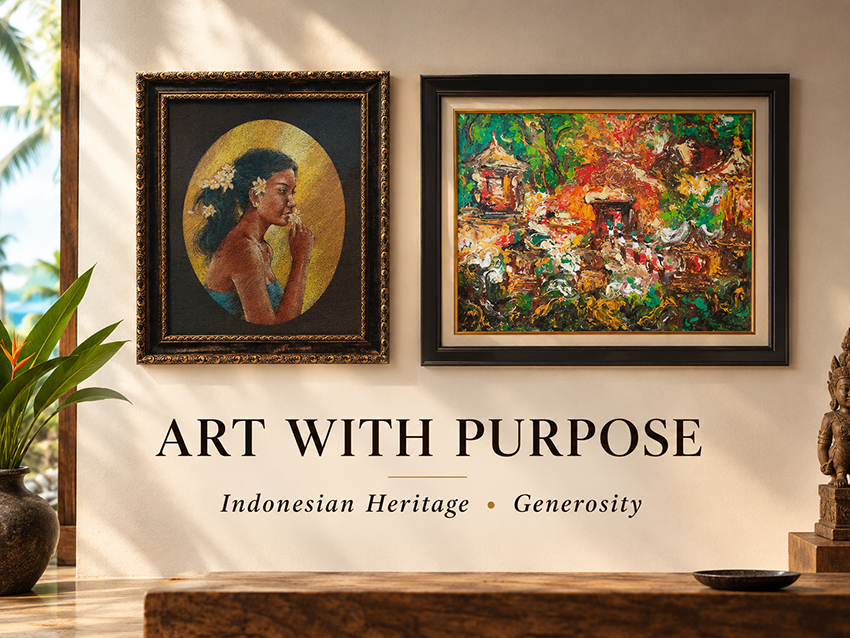
Two distinctive Indonesian artworks are being offered for private sale from a personal collection, presenting a rare opportunity to acquire meaningful works of art while supporting children in need and vital charitable causes.
Art has the remarkable ability to preserve memories, capture the spirit of a place, and connect people across generations. In Indonesia, where artistic expression is deeply intertwined with spirituality, tradition and everyday life, a painting can represent far more than its physical materials. It can become a lasting reflection of the country’s cultural identity, its natural beauty and the stories of its people.
Two Indonesian artworks, each with its own character and history, are now available for private sale from a private collection. One celebrates the dramatic coastal landscape and spiritual significance of Bali, while the other offers a glimpse into the island’s artistic heritage through a portrait dating back to 1966.
Beyond their visual appeal, these works share an additional purpose: proceeds from their sale are dedicated to supporting children in need and important charitable causes. For a prospective buyer, this creates an opportunity to bring a distinctive piece of Indonesian art into their home or collection while contributing to something that reaches beyond the artwork itself.
1. Tanah Lot by Aam Rachmansyah: Capturing the Spirit of Bali
Artwork details:
- Artist: Aam Rachmansyah
- Title: Tanah Lot
- Medium: Acrylic on canvas
- Style: Abstract
- Dimensions: 120 × 80 cm
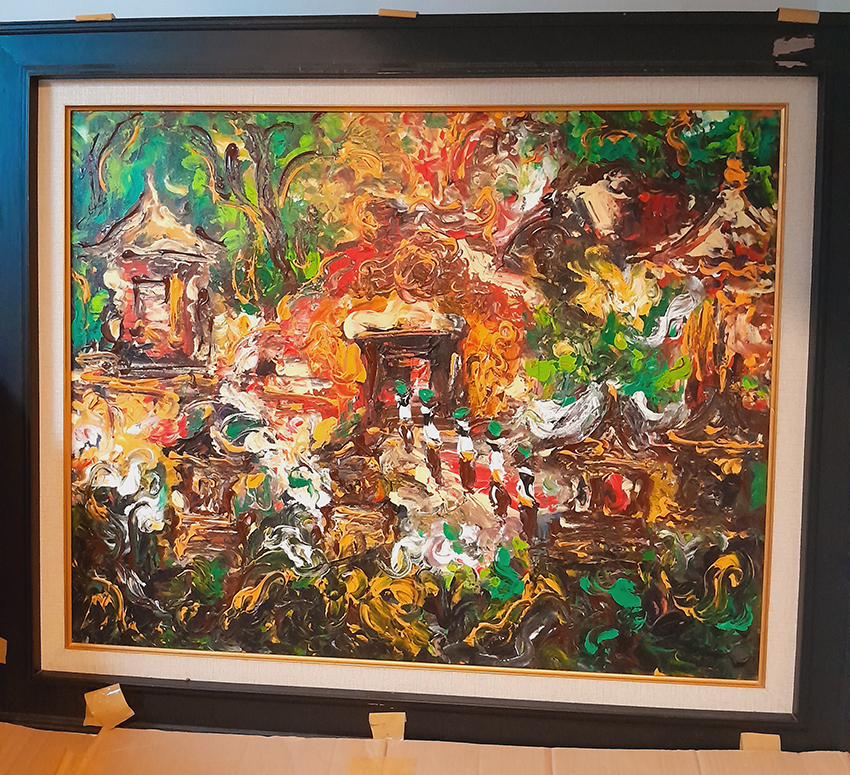
Few Balinese landmarks possess the immediate visual and emotional impact of Tanah Lot. Rising from a rocky offshore formation against the movement of the Indian Ocean, the temple has become one of Bali’s most recognisable cultural and spiritual landmarks. Its striking silhouette, dramatic coastal setting and enduring place in Balinese religious life have inspired generations of visitors, photographers and artists.
Tanah Lot is not simply a picturesque destination. It forms part of Bali’s wider landscape of sacred temples, where the relationship between the natural environment and spiritual life remains central to the island’s cultural identity. The surrounding sea, the changing light and the powerful rhythms of the tides all contribute to the atmosphere that makes this location so compelling.
It is this combination of movement, tranquillity and grandeur that provides the inspiration for Tanah Lot by Aam Rachmansyah.
An expressive interpretation of an iconic landmark
Rather than presenting the temple as a purely photographic representation, Rachmansyah approaches the subject through abstract expression. Sweeping brushstrokes, rich acrylic colours and contrasting forms convey the energy of the ocean while allowing the temple’s familiar silhouette to anchor the composition.
The painting creates a visual tension between two opposing forces: the restless movement of the sea and the quiet permanence of the sacred structure. This contrast gives the work its sense of scale and atmosphere, inviting the viewer to look beyond the immediate landscape and consider the relationship between nature, place and belief.
The acrylic medium allows for bold colour and expressive handling, giving the canvas a strong visual presence. At 120 × 80 centimetres, the painting offers substantial scale without requiring an exceptionally large wall, making it a potential focal point for a living room, reception area, private office or curated art collection.
For those with a personal connection to Bali, the work may evoke memories of the island’s coastline and distinctive cultural landscape. For international collectors, it offers an opportunity to bring a recognisable element of Indonesian identity into a contemporary interior.
Why Tanah Lot continues to inspire
Part of Tanah Lot’s enduring appeal lies in the way it changes with its surroundings. The temple can appear serene beneath a calm sky or dramatic against crashing waves and a shifting horizon. That contrast between permanence and constant movement gives artists an unusually rich subject to interpret.
In this painting, the emphasis is not solely on architectural detail. Instead, the composition seeks to communicate the feeling of the place: the force of the water, the atmosphere of the coast and the enduring presence of the temple.
The result is a work that can be appreciated both as a representation of Bali and as an independent abstract composition. Its subject gives it a clear cultural reference, while its expressive treatment leaves room for individual interpretation.
Explore the artwork and enquire about a private purchase:
View Tanah Lot on Facebook Marketplace
2. Gadis Bali (Balinese Maiden): A Glimpse into Indonesia’s Artistic Past
Artwork details:
- Title: Gadis Bali (Balinese Maiden)
- Date: 1966
- Medium: Crayon on brown rice paper
- Dimensions: 60 × 80 cm
- Provenance: Family heirloom, reportedly passed down through generations
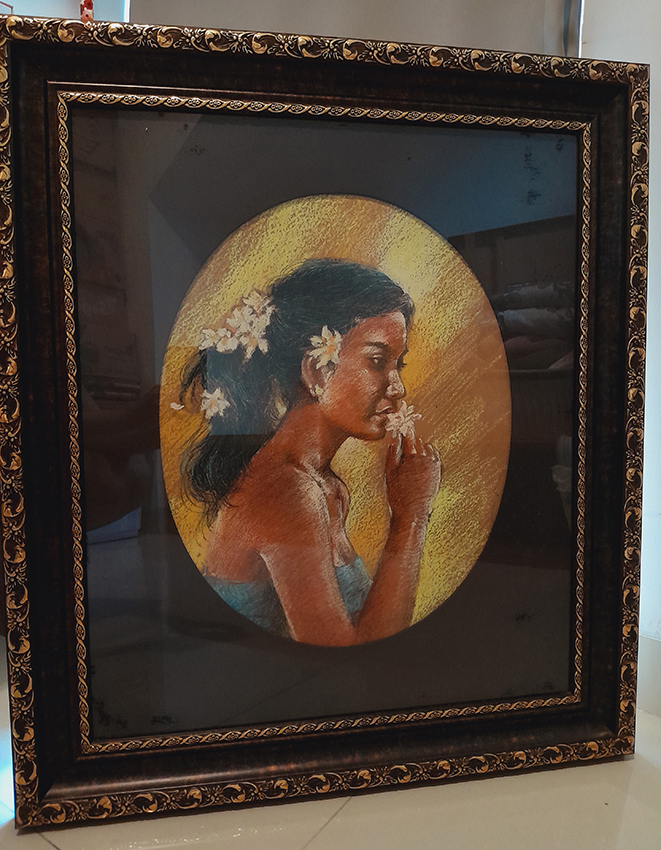
Where Tanah Lot celebrates Bali through landscape, Gadis Bali turns attention to the individual and the human dimension of cultural heritage.
Dated 1966, this portrait is described as a family heirloom that has been passed down through generations. Its significance lies not only in its depiction of a Balinese maiden, but also in the sense of continuity that comes with an artwork preserved within a family over time.
The mid-1960s were a period of significant change for Indonesia. The country was navigating a new chapter in its national history, while Bali’s artistic traditions continued to reflect the island’s distinctive blend of community life, ceremonial practice, spirituality and craftsmanship.
Portraiture offers a different way of understanding this cultural landscape. Rather than depicting a famous landmark, it places the human figure at the centre of the composition, inviting a more personal connection with the subject.
The character of a traditional portrait
Gadis Bali presents a Balinese maiden with an expression of quiet poise and grace. The portrait’s appeal rests in its restrained character: rather than relying on dramatic colour or a monumental setting, it draws the viewer towards the figure itself.
The use of crayon creates a different visual language from the fluid, expansive brushwork of the accompanying Tanah Lot painting. Crayon can produce fine lines, soft tonal transitions and subtle variations in texture, making it well suited to a portrait in which expression and detail are central to the viewing experience.
The work’s brown rice paper provides another distinctive element. Its organic appearance and warm tonal character contribute to the artwork’s overall sense of age and individuality. The visible character of the paper can also serve as a reminder that works on paper require thoughtful preservation, particularly when they have been kept for decades.
Together, the medium, surface and subject give Gadis Bali a quieter presence than a large contemporary canvas. It is a work that invites closer inspection and rewards the viewer who takes time to appreciate its details.
The significance of a family heirloom
An artwork that remains within a family for generations can carry a meaning that extends beyond its original artistic purpose. It may represent a connection to a particular period, a memory of an earlier owner or a family’s enduring appreciation for art and cultural identity.
For collectors, provenance—the documented history of an artwork’s ownership—can be an important consideration when assessing a piece. In this case, the work is described as a family heirloom dating to 1966. Prospective buyers may wish to enquire about any available documentation, previous ownership details and the artist’s identity, if known.
Its age and materials also make condition an important consideration. Before display, a collector may wish to have the paper assessed by a qualified conservator and to use appropriate archival mounting, protective glazing and a location away from direct sunlight and excessive humidity.
These practical considerations do not diminish the artwork’s appeal. Rather, they are part of preserving a historical object so that its character can continue to be appreciated by future generations.
A distinctive addition to a collection
For someone building a collection of Indonesian art, Gadis Bali offers a different experience from a contemporary landscape painting. Its portrait subject, mid-century date and reported family history give it a personal and intimate character.
It may appeal to buyers interested in Balinese cultural representation, works on paper, vintage Indonesian art or objects that carry a story beyond their appearance.
As with any historical artwork, its value to an individual collector will depend on personal interest, condition, available provenance and any further information that can be established about its creation. Its reported history and distinctive materials nevertheless make it an intriguing piece to explore.
Discover the artwork and enquire about a private purchase:
View Gadis Bali on Facebook Marketplace
Art That Gives Back: Turning Appreciation into Action
Art collecting is often associated with personal enjoyment, cultural appreciation and the preservation of objects that might otherwise be lost to time. These two artworks introduce another dimension to that experience: the opportunity to direct the proceeds of a private sale towards charitable purposes.
The initiative behind their sale is dedicated to supporting children in need and vital charitable causes. This gives prospective buyers an additional reason to consider the works, particularly those who value the idea that a personal acquisition can also contribute to a wider social good.
Children facing hardship may need support across a range of areas, including access to education, essential resources and opportunities to build a more secure future. Charitable organisations and community initiatives play an important role in addressing these needs, often relying on donations and the generosity of individuals to continue their work.
A charitable art sale offers one way to connect the appreciation of culture with that generosity. Instead of an artwork being valued solely for its decorative qualities, the transaction becomes part of a broader effort to support people who need assistance.
For buyers, the appeal is twofold: the opportunity to acquire an artwork that resonates with their own interests, and the knowledge that the purchase is intended to support a charitable purpose.
Prospective purchasers are encouraged to enquire directly about the sale arrangements, the intended allocation of proceeds and the charitable causes that will benefit. Confirming these details before purchase helps ensure that the buyer understands how their contribution will be used.
Two Artworks, Two Stories, One Meaningful Opportunity
Although these works differ in style, medium and subject, each offers a distinct way to connect with Indonesia’s artistic and cultural character.
Tanah Lot by Aam Rachmansyah brings together the energy of the ocean and the enduring presence of one of Bali’s most recognisable sacred landmarks. Its expressive composition and substantial scale make it a potential centrepiece for a home, business or private collection.
Gadis Bali, meanwhile, offers a more intimate perspective. Dated 1966 and described as a family heirloom, its portrait subject, crayon medium and brown rice paper give it a distinctive historical character that may appeal to collectors interested in Indonesia’s artistic past.
For the right buyer, either work could become more than an addition to a wall. It could serve as a conversation piece, a reminder of Bali’s cultural richness or an object to be appreciated and preserved for years to come.
Most importantly, the charitable intention behind the sale adds a further layer of meaning. By acquiring one of these artworks, a buyer has the opportunity to combine a personal interest in art with support for children in need and vital charitable causes.
Enquiries and Private Sale
Both artworks are being offered for private sale from a private collection. Buyers interested in learning more about either piece, including its availability, asking price, condition and sale arrangements, can enquire through the listings below.
Art preserves the stories of places, people and generations. When its sale is also intended to support a charitable cause, that legacy can extend beyond the artwork itself.
For those seeking a distinctive piece of Indonesian art with a meaningful purpose behind its sale, these two works offer an opportunity to bring beauty, heritage and generosity together.